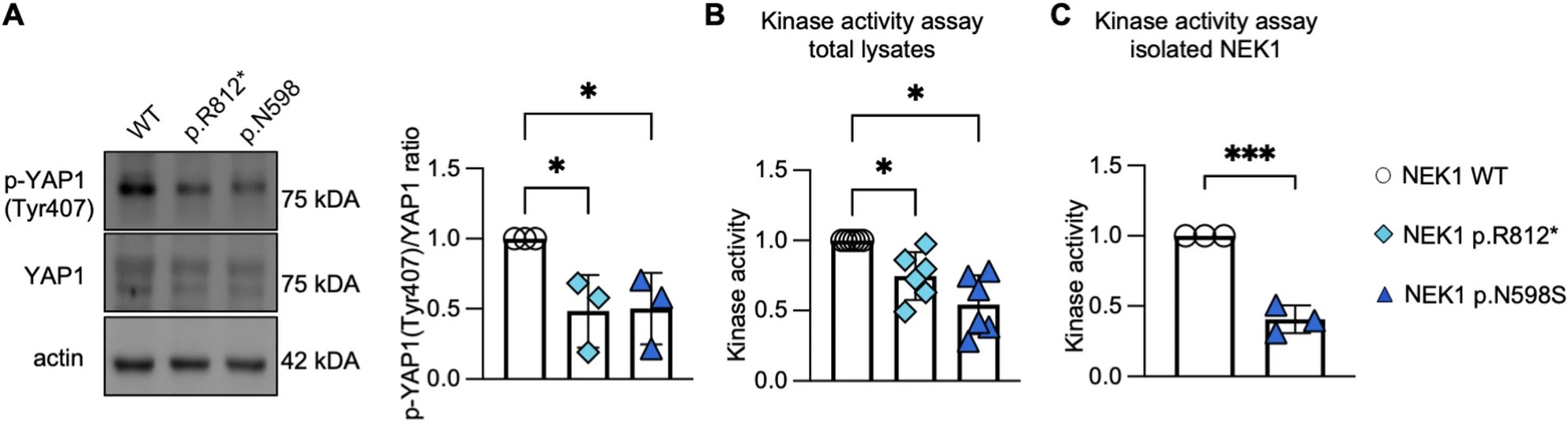
While mutations in the NEK1 gene leading to a loss of the protein were previously the primary known cause of NEK1-associated amyotrophic lateral sclerosis (NEK1-ALS), our study provides the first evidence of a disease-causing missense variant (p.N598S). This rare gene variant shows familial clustering, is enriched in European ALS cohorts, and impairs NEK1 kinase activity despite normal protein expression levels. In human motor neurons, the p.N598S variant causes pathological changes, including increased susceptibility to DNA damage, altered primary cilium morphology, and heightened apoptotic activity. These results thus demonstrate, both genetically and functionally, that a direct impairment of NEK1 kinase function is a key mechanism in the pathogenesis of ALS. This discovery has immediate diagnostic and therapeutic implications, particularly for the assessment of gene variants of uncertain significance and the development of targeted treatment strategies.
Reference and link to Publication:
Brenner D, Ponomarenko A, Petrut I, et al. A rare missense variant impacting NEK1 kinase function is associated with ALS. Acta Neuropathol Commun. 2026;14(1):135. Published 2026 Jun 25. doi:10.1186/s40478-026-02351-6